
He walks down the street, quarter zip on, carabiner clipped into place, and wired earbuds in, blasting his favorite tunes at a respectful but detectable volume in which the right girl in close-enough proximity might think, “Is that boy listening to beabadoobee?”
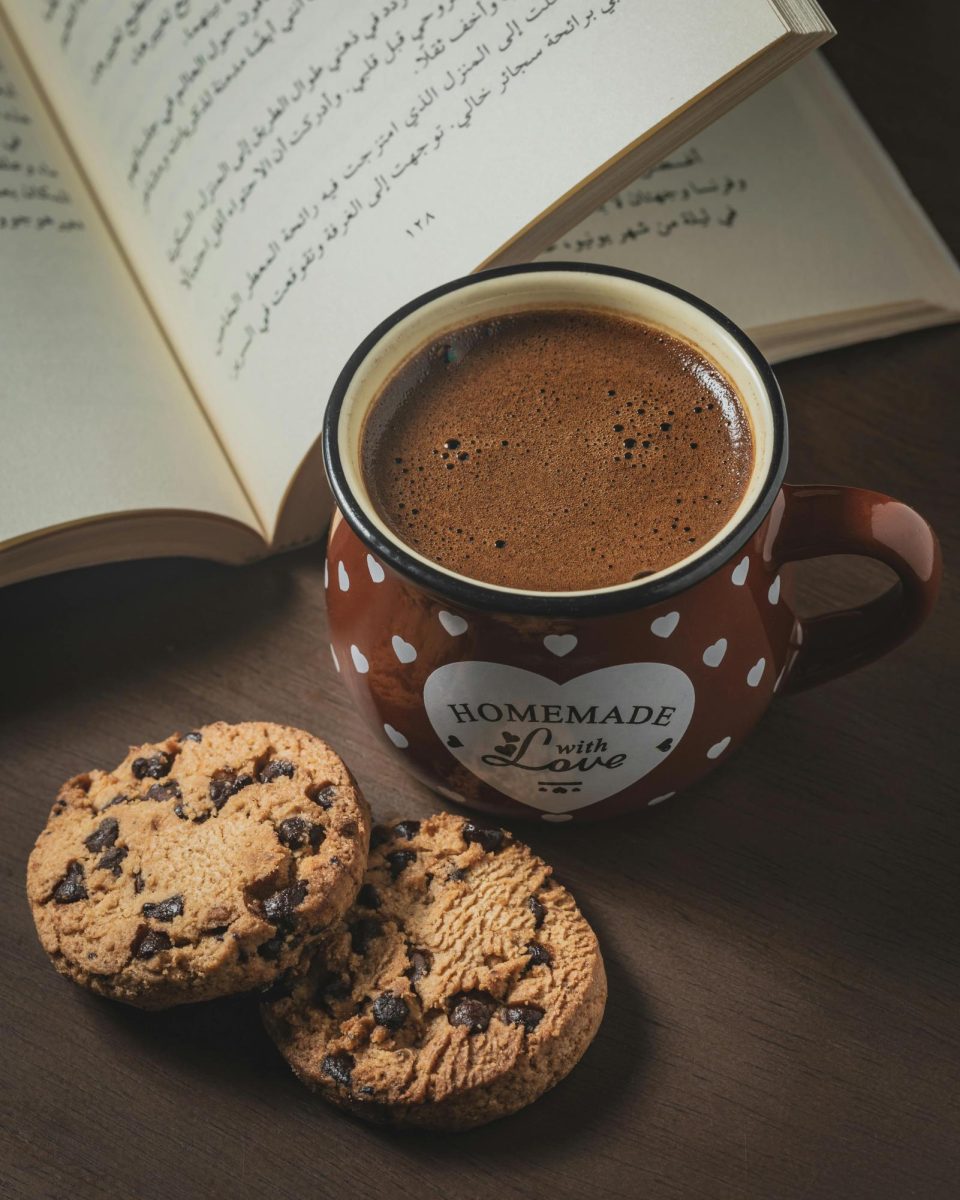
The creature holds the door for an old lady as he walks into Starbucks, The Bell Jar and leather wallet ready in his delicately ring-ed and manicured hands.
Waiting for “matcha for Derek” to be called out into the female-dominated space, the mammal bounces on his toes in anticipation of being noticed.
Some might call this behavior obnoxious. Others performative, saying it’s done for all the wrong reasons. “Pick me”, even. Yet, among the miffed, indifferent, or angered voices, another dares to express they don’t hate it when men act that way; there’s a reason why it works.
For example, Leah Sava Jeffries of Disney Plus’s Percy Jackson and the Olympians, admitted in a recent interview with Buzzfeed Celeb that she thinks quarter zips look good. “No, they’re not ugly. They look really nice on people—for sure. I just don’t like the… fact like how it’s becoming famous for a certain reason.”
Adding fuel to the already-roaring fire, one female West Seattle student bravely declared, “I think all men should become performative males”. The silence after that statement was loud, and the rebuttal was deafening.
This year, there has been ample online discourse regarding the mixed feelings elicited by come-to-life men written by women who seem to be infecting the coffee shops and Barnes and Nobles with their disingenuous ways. Deedsmag defined a performative male as “an increasingly popular neologism for describing men who adopt progressive and often feminist visual codes without subscribing to or caring for the underlying progressive values.”
The question of the hour seems to be, is it nice they’re trying, or is it misleading to change oneself for the female gaze? The upset around this issue, like Deedsmag mentioned, is that men fitting this characterization claim to care about certain topics like feminist literature and gender rights, but fail to truly incorporate those beliefs into their ideologies. Among the “performative male” or “male manipulator” haters, it’s still important for people to consider why integrating into the performative culture is appreciated by some.
“They’re drinking objectively good drinks and wearing better clothes,” commented the aforementioned controversial West Seattle student. “What do I have to complain about?”
The very same student additionally expressed an interest in bringing back full-regalia attire complete with monocles, which was later contextualized with the discovery that she falls asleep to Pride and Prejudice on audiobook most nights. “It would be the most effective way to appeal to the female gaze, of course.”
On a more authentic note, some students admitted that they expect the “performative male” stereotype has gained such popularity because it boils down to the female experience of not feeling listened to. Maybe the reason some women are drawn towards performative men is not because they prioritize ending up with a matcha-drinking man, but because they like knowing someone notices and understands their interests. It also may seem to the female population that self-improvement efforts are less common among men, meanwhile girls often feel pressured to reinvent themselves to stay likable and feel more worthy of attention.
Picture the near-universal stress girls face getting ready for a dance, and the incomparable preparation process of a man. Sometimes even weeks before the dance, the perfect dress is chosen. A week before, they look in the mirror, praying for their skin to clear up before the big night. They work their hair washing schedule around the date of the function to have perfectly pristine hair at the right time, and the night before, they go through the trenches–AKA an “everything shower”.
On the day of, girls do their skincare or makeup, put on their jewelry, maybe spritz on some perfume, then put on their dress and shoes. Standing in the blistering cold to get the perfect photo in their full outfit (minus a jacket), they convince themselves it’s going to be worth it.
Who do they do this for? Maybe it’s for their self, maybe it’s so they can look as good as their friends, or maybe it’s to impress someone on their mind. Either way, it probably won’t matter because when they get to the dance, their hair will fall flat, and they’ll come to the realization that they’re stuck in a dark room with a hoard of sweaty teenage boys; they are trapped at a mediocre venue full of boys who took a rinse shower 30 minutes before they left and threw on the same white button up and dark pants they wear to every dance.
With the constant shifting of beauty expectations and double standards for what is considered hygienically and socially acceptable, it’s discouraging to realize a male would never understand the lengths girls are expected to go to look presentable, and the effort they make to feel special. Seeking an inkling of effort, women are drawn towards just-above-bare minimum, probably around where the “performative male” lies.
In the end, the pro-”performative male” student seemed to think that the performative male stereotype, although controversial, has evolutionary benefits. She hopes that other men can learn a thing or two from these posers. “So what, they know exactly what they’re doing?”